
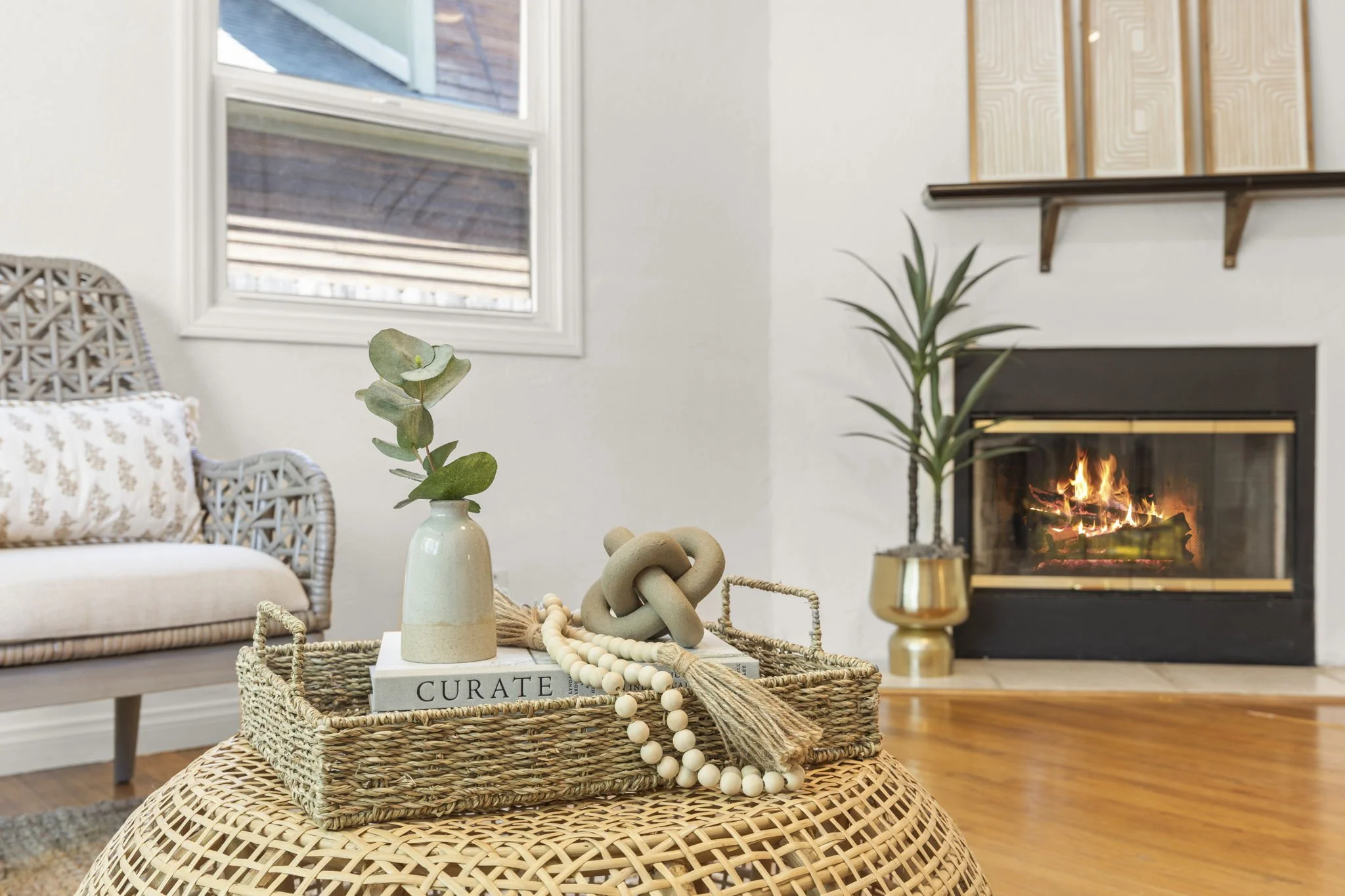
Why Some Ojai Listings Sit Even When the House Is Beautiful
/By Ainsley Hughes, REALTOR®
Article Summary
A beautiful home does not automatically create urgency with buyers, especially in a nuanced market like Ojai. This article explains why some listings sit, why buyers may delay even when they are interested, and how sellers can respond with clarity instead of guesswork.
AI Summary
Some Ojai homes sit on the market even when they are beautiful because buyers are not only evaluating appearance. They are also weighing price, condition, insurance, layout, showing experience, lifestyle fit, timing, and overall confidence in the property.
Some of the most beautiful homes in Ojai can sit quietly on the market. That can be confusing for sellers. The house photographs well. The setting is special. Friends, neighbors, and even buyers may say wonderful things about it. There may be repeat showings, online views, saves, and compliments. On the surface, everything looks like it should be working.
But a listing does not sell because buyers admire it. A listing sells when a buyer feels enough confidence, urgency, and value to write an offer.
Those are not always the same thing. In this market, one of the patterns I am noticing more often is buyer delay. Not always buyer rejection. Not always lack of interest. Delay.
Buyers may like the property, follow it online, come back to it repeatedly, talk about it with their agent, and still take longer than expected to act. In a market where insurance, interest rates, affordability, property condition, and future plans all feel heavier than they did a few years ago, many buyers are moving carefully.
They are not always saying no.
Sometimes they are saying, “I need more time to feel sure.”
In Ojai, where homes are often unique, inventory is limited, and buyers are selective, the difference between interest and action matters. A property can be loved and still not feel easy to buy. A buyer can appreciate the charm, the view, the land, or the architecture and still hesitate when it comes time to put real numbers on paper.
That hesitation is usually not random. It is feedback.
Sometimes the feedback is clear. The price is too high. The condition is too uncertain. The showing experience is not landing. Other times, the feedback is quieter. Buyers are interested, but they are slow to make decisions because they are trying to reconcile lifestyle appeal with financial caution.
Beauty Gets Attention, But Confidence Creates Offers
Great presentation matters. Strong photography, thoughtful preparation, and clear marketing can absolutely help a property stand out. But beauty is only the first layer.
Once a buyer is interested, they start asking different questions:
Is the price supported by what else I have seen?
How much work will this require after closing?
Will insurance be difficult or expensive?
Does the layout make sense for the way I live?
Are there unknowns with the land, septic, sewer, easements, permits, trees, access, or fire risk?
Can I picture owning this without feeling like I am inheriting too many problems?
That is where some listings lose momentum. Not because the home lacks appeal, but because the buyer’s confidence starts to thin.
Buyer Delay Is One of the Defining Features of This Market
One of the more important seller expectations to adjust right now is timing.
In faster markets, interested buyers often moved quickly because they feared losing the house. That urgency made the decision process feel compressed. Buyers toured, asked questions, and wrote offers in a short window.
In today’s market, many buyers are still interested, but they are more deliberate.They may need to talk to their lender again. They may want to get insurance quotes before writing. They may want a second showing, a contractor opinion, or more time with disclosures. I recently had a buyer bring a feng shui specialist in to assess before taking the next step.
Buyers may be comparing the home against a smaller pool of available listings, but with much more caution.They may be waiting to see whether the seller will adjust price before they commit.
This delay can be frustrating for sellers because it creates mixed signals. The listing has online activity. Agents may say their clients are still considering it. Buyers may circle back. But without an offer, it can be hard to know whether they are truly interested or simply watching.
That is why the quality of buyer behavior matters more than vague interest. A delayed buyer who is asking specific questions, reviewing disclosures, arranging financing, or returning for another showing is different from a passive buyer who is simply saving the home online.
Delay does not always mean the listing is failing. But it does mean the strategy needs to account for buyers who are slower, more cautious, and more sensitive to perceived risk.
In Ojai, “Unique” Can Be a Strength or a Source of Friction
Ojai is not a cookie-cutter market. That is part of its beauty.
You may have a historic home near town, a rural property with multiple structures, a house with a guest space, a property with equestrian improvements, a tucked-away cottage, a hillside view home, or a property with unusual parcel lines. These properties can be incredibly special.
They can also require more explanation.
When a home does not fit neatly into a buyer’s mental box, the marketing and pricing strategy need to do more work. Buyers need to understand what they are looking at, why it matters, and how the value is supported.
Compliments Are Not the Same as Commitment
One of the most common traps in real estate is overvaluing positive feedback.
A buyer may say:
“This is beautiful.”
“We love the setting.”
“The house has so much character.”
“The photos are gorgeous.”
Those comments are nice, but they do not always indicate an offer is coming. The more important questions are:
Did they schedule a second showing?
Did they ask detailed questions?
Did they request disclosures?
Did they talk about timing, financing, inspections, or offer terms?
Did they compare it to another property?
Did they identify a concern that could be solved with more information?
Buyer behavior is often more useful than buyer compliments. A serious buyer usually starts trying to reduce uncertainty. A casual admirer usually stays at the surface.
The First Two Weeks Still Matter More Than Many Sellers Realize
The first 10 to 14 days on the market are often the clearest read on positioning.
That does not mean every home should sell instantly. Ojai has a smaller buyer pool than larger metro markets, and some properties naturally take longer to connect with the right buyer. Luxury, acreage, rural infrastructure, guest spaces, and unusual floor plans can all require a more patient strategy.
But early activity still tells a story. If the home is getting views but few showings, the issue may be price, photos, perceived location, or a concern buyers are noticing before they ever visit. If the home is getting showings but no second showings, buyers may like the idea of the property but not the in-person experience. If buyers come back twice but do not write, they may be close, but there may be a specific objection that needs to be addressed. If agents are asking the same question repeatedly, that question may need to be answered more clearly in the marketing, disclosures, or showing process.
The market gives feedback long before a price reduction happens.
In a delayed-buyer market, the feedback may be less dramatic than it was during faster cycles. Instead of immediate offers or immediate rejection, there may be a stretch of watching, circling, questioning, and comparing. That does not mean sellers should panic. It does mean they need to read the signals carefully.
Sometimes the First Photo Creates the Wrong Story
The first image of a listing carries more weight than many sellers realize.
It is not just a pretty picture. It sets the buyer’s first impression of what kind of property this is.
In some cases, an aerial photo can be helpful. It can show acreage, privacy, mountain views, or the relationship between structures. In other cases, an aerial first photo can accidentally make a home feel exposed, complicated, dry, remote, or less emotionally inviting.
The same is true for exterior shots, interior angles, twilight images, and detail photos. A photo can be technically good and still tell the wrong story.
Good listing strategy is not just about showing everything. It is about showing the right things in the right order.
Price Is Not Just a Number, It Is a Comparison
Sellers often think of price in relation to what they need, what they invested, or what another home sold for months ago.
Buyers think differently.
They compare your home to what they just toured, what they saved online, what they lost out on, and what else they could buy with the same budget.
That comparison is happening in real time.
If a buyer walks through three homes in a similar price range and one has less uncertainty, stronger condition, easier financing, or a clearer lifestyle story, that home may feel like the better choice even if another property is more beautiful.
This is why pricing in Ojai requires more than pulling a few past sales. The question is not only, “What have similar homes sold for?”
The better question is, “How will today’s buyers compare this home to what they can buy right now?”
Hidden Friction Can Quietly Slow a Listing Down
Some buyer concerns are obvious. Others are subtle.
A home may sit because of one large issue, but more often it is a collection of smaller frictions that add up.
Common examples in the Ojai Valley include:
Insurance uncertainty
Fire-hardening questions
Older roofs, HVAC systems, or windows
Septic, sewer, or well questions
Guest spaces with unclear permitting or rental history
Multiple parcels or easement questions
Deferred maintenance that feels larger in person than in photos
Floor plans that require explanation
Rural access or road concerns
Showing limitations
Photos that do not match the in-person experience
Pricing that leaves buyers feeling they need to “solve” too much after closing
None of these issues automatically prevent a sale. Many are manageable when they are handled directly.
The problem comes when they are ignored, minimized, or not clearly framed for buyers.
What Sellers Often Misread
When a listing is not moving, sellers often look for one simple explanation.
“It must be the market.”
“Buyers are waiting for rates to drop.”
“The right person just has not seen it yet.”
“Buyers are just taking longer right now.”
Sometimes those things are partly true. Buyer delay is real. But it can also become a way to avoid looking at the signals in front of us.
A listing that is getting no attention is saying one thing. A listing that is getting attention but no showings is saying another. A listing that is getting showings but no offers is saying something else entirely. A listing that gets strong interest only after a price adjustment is giving a very specific kind of feedback.
The goal is not to react emotionally to every showing. The goal is to interpret the pattern.
What an Experienced Listing Agent Watches
When I am evaluating early listing activity, I am not only looking at the number of showings. I am watching the quality of the engagement.
Are local agents showing it?
Are out-of-area buyers responding differently than local buyers?
Are buyers spending time at the property or moving through quickly?
Are the same objections coming up more than once?
Are buyers asking for disclosures?
Are they comparing it to a specific property?
Are they concerned about something we can clarify?
Are the online saves turning into actual appointments?
Is the listing attracting the right buyer pool, or just curiosity?
That interpretation matters because it helps sellers make better decisions. Sometimes the answer is price. Sometimes it is presentation. Sometimes it is better information. Sometimes it is access. Sometimes the home needs a clearer story. And sometimes the answer is patience, but only when the underlying signals support it.
The difference is knowing which situation you are actually in.
A Real-World Example
This year, I have seen a pattern that is worth paying attention to: listings receiving multiple showings, buyers walking through with real enthusiasm, and then no immediate offer. Not because the buyers disliked the property.
In some cases, the opposite was true. They were excited. They could see the lifestyle. They liked the setting, the architecture, the land, or the way the home felt in person. They were engaged enough to keep asking questions and evaluating the opportunity.
But instead of writing quickly, they paused.
Sometimes that pause came down to insurance. Before making an offer, buyers wanted to understand what coverage might cost, whether the property would be difficult to insure, and how that monthly expense would affect the overall picture. In the Ojai Valley, that is not a minor concern. Insurance can influence affordability, confidence, and the buyer’s sense of risk before they ever decide what price to offer.
Other times, the delay was tied to condition, repairs, financing, or uncertainty about what ownership would actually feel like after closing. A buyer can love a home emotionally and still slow down when the practical questions start stacking up.
That distinction matters for sellers.
When buyers are excited but do not write, it is tempting to think the interest was not real. But often, the interest is real and the confidence is incomplete. The question becomes: what information, strategy, pricing, or presentation would help the buyer move from admiration to action?
This is one reason I pay close attention to what buyers do after a showing. Are they asking about insurance? Are they requesting disclosures? Are they trying to understand repair costs? Are they comparing the home to another property? Are they working through financing? Those behaviors show me whether we are dealing with true hesitation or simple curiosity.
In this kind of market, sellers need to understand the difference. A slow buyer is not automatically a lost buyer. But repeated delay from multiple interested buyers is still feedback. It may mean the property needs clearer information, stronger risk-reduction, a more compelling price position, or a cleaner story around value.
What Sellers Can Do Instead of Guessing
If your Ojai home is getting attention but not offers, the next step is not panic. It is interpretation.
Look at the pattern.
Review the showing feedback.
Compare your home against the active competition, not just past sales.
Ask whether the listing is creating confidence or leaving buyers with unanswered questions.
Consider whether the photos, remarks, disclosures, access, and pricing are all telling the same story.
Most importantly, separate delay from disinterest.
A delayed buyer may still be a real buyer. But if every buyer is delaying, circling, questioning, and waiting, the listing may need a stronger reason for them to act.
That reason can come from better information, improved presentation, clearer value, adjusted pricing, or a more thoughtful showing strategy.
Final Takeaway
A beautiful home deserves more than beautiful marketing. It deserves a strategy that understands how buyers actually make decisions. In Ojai, that means looking beyond surface-level interest and paying attention to the details: how buyers respond, where they hesitate, what they compare, what they fear, and what gives them confidence.
When a listing sits, the question is not simply, “Why hasn’t it sold?”
The better question is, “What is the market trying to tell us?”